
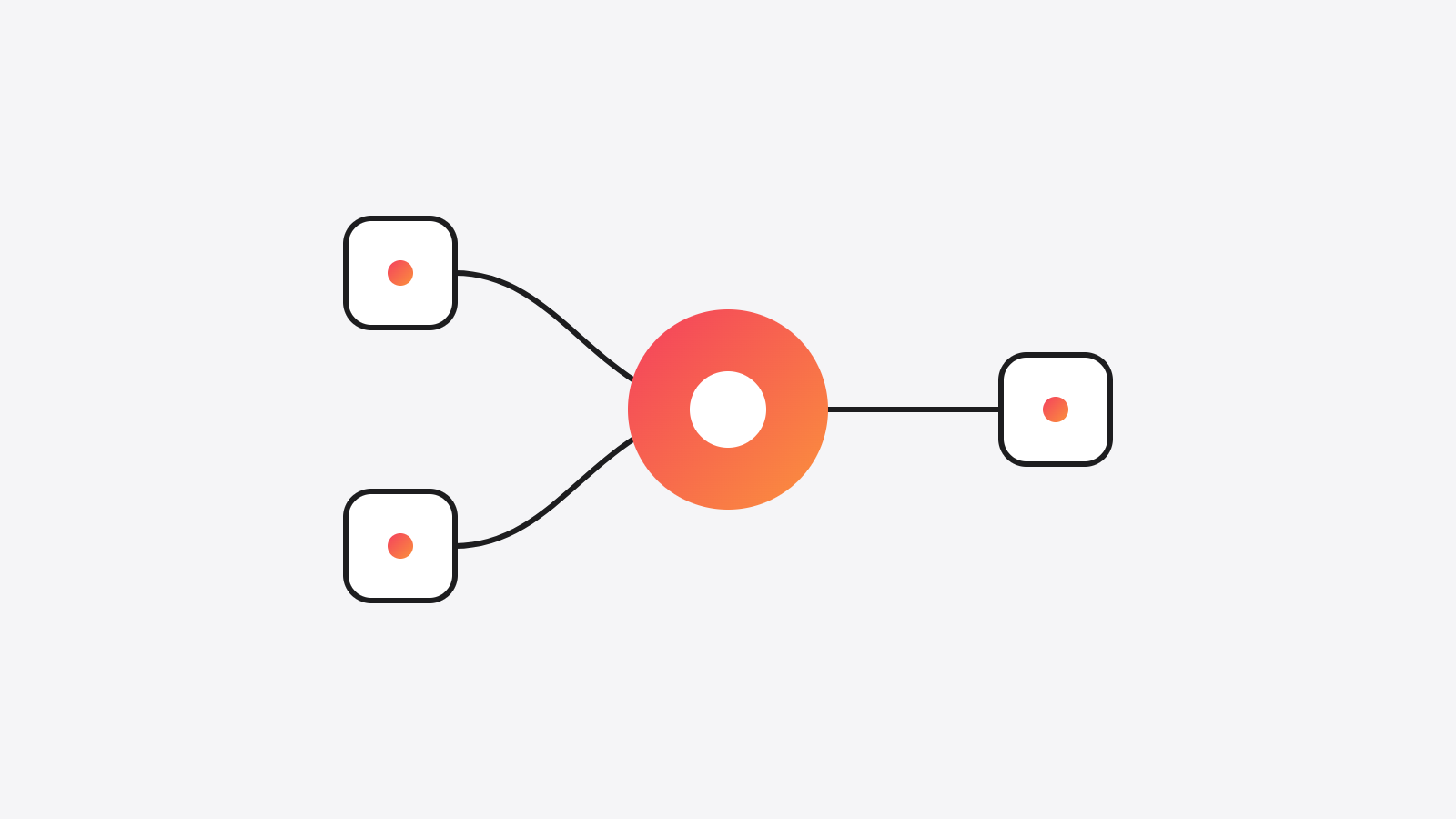
Most "add AI to your business" advice assumes you'll adopt a new tool: a new chatbot, a new platform, a new subscription with its own login. For most small and mid-size businesses that's backwards. Your business already runs on software that works: a CRM, an inbox, a booking system, some spreadsheets. The win is not replacing them. It's wiring AI into them.
That's what a custom AI integration is, and it's most of the AI work we ship.
Quick answer: what a custom AI integration is
A custom AI integration connects a model like Claude or GPT to software you already use, so the AI can read from and act on your real business data: drafting replies in your inbox, qualifying leads in your CRM, parsing documents into your accounting system. Typical builds run $3,000 to $20,000 depending on how many systems are involved, far below replacing working software. For agent-style builds, see our AI agent cost guide.
Integration beats replacement
Buying a new AI-powered tool means migrating data, retraining the team, and betting on a startup's roadmap. Integrating AI into your current stack means nothing about your team's day changes except the tedious parts getting done for them.
The other reason: your data is already where it lives. An AI that can see your actual customer history, actual calendar, and actual pricing gives useful answers. A disconnected chatbot gives generic ones. We covered the difference in AI agents vs chatbots.
Five integrations we see pay off fastest
- Inbox triage and drafting. AI reads incoming email, classifies it (lead, support, invoice, spam), drafts a reply in your voice, and files it. You approve instead of typing.
- CRM lead qualification. New leads get researched, scored, and summarized before you ever open them. Follow-ups get drafted automatically. More in automating lead follow-ups.
- Document parsing. Invoices, intake forms, and contracts get read by AI and pushed into your accounting or project software as structured data. Nobody retypes a PDF again.
- Booking operations. AI watches the calendar: confirmations, reminders, reschedule handling, and no-show follow-ups happen without a human touching them.
- Reporting. A weekly plain-English summary of sales, jobs, or bookings, written by AI from your real numbers and delivered to your inbox.
How the plumbing works (briefly)
Modern models connect to other software through APIs and, increasingly, through MCP (Model Context Protocol), an open standard for giving AI tools structured access to systems. We know this layer well because we build on both sides of it: our own SEO platform HeySeo ships an MCP server with 72 tools that lets AI assistants work with real Search Console and analytics data.
The same pattern applies to physical businesses. In our Modern Cue Club build, the booking platform drives the door access system through an API. Once your systems can talk, automation stops being a demo and starts being operations.
What it costs and how to start
A single-system integration (say, inbox drafting) lands around $3,000 to $8,000. Two or three systems working together, $8,000 to $20,000. Running costs are usually $50 to $500 a month in model usage, scaling with volume.
The right first project is narrow: one workflow that happens daily, annoys someone, and has clear rules. Ship that in a couple of weeks, measure the hours saved, then expand. That's the approach behind our AI automation service, and it's why our clients' first integration is rarely their last.
Want to know which of your current tools can be wired together? Book a free strategy call and bring a list of the software you already pay for. That list is the project plan.


